
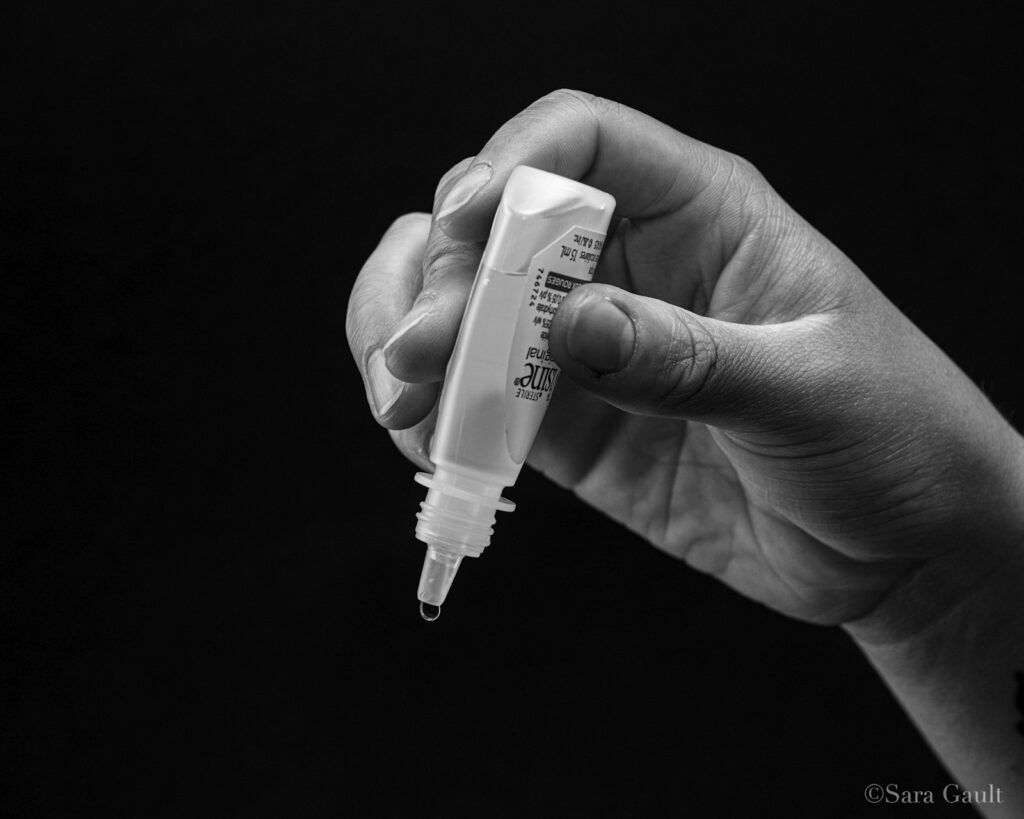
If your eyes feel scratchy, gritty, or tired by the end of the day, you may be dealing with dry eye syndrome — one of the most common reasons people come into my office. It’s not just an annoyance. Left unmanaged, it can make it harder to read, drive at night, or stare at a screen for more than a few minutes without discomfort.
The good news is that this condition is usually very manageable once you understand what’s driving it and what actually helps.
What Causes Dry Eye Syndrome?
Your eyes stay comfortable thanks to a thin layer of tears that coats the surface every time you blink. Dry eye syndrome happens when your eyes don’t produce enough tears, or when the tears you do make evaporate too quickly. Common triggers include aging, hormonal changes, certain medications (like antihistamines and some blood pressure drugs), dry or windy climates, and long stretches of screen time, which is also a major driver of digital eye strain — we blink up to 60% less often while staring at a screen, so tears evaporate before they can do their job.
Common Symptoms You Shouldn’t Ignore
It doesn’t always feel “dry.” Many patients describe a burning or stinging sensation, a feeling like there’s sand in the eye, redness, light sensitivity, or blurry vision that clears briefly after blinking. Oddly enough, excessive watering can also be a sign of this condition — it’s your eyes overcompensating for poor-quality tears.
Simple Ways to Manage It at Home
For mild cases, a few habits make a real difference. Use preservative-free artificial tears regularly rather than waiting until your eyes feel uncomfortable. Follow the 20-20-20 rule during screen work: every 20 minutes, look at something 20 feet away for 20 seconds, and make a conscious effort to blink fully. A humidifier helps in dry indoor air, and warm compresses can loosen oil glands along the eyelid margin that keep tears from evaporating too fast. Omega-3 fatty acids, found in fish oil and flaxseed, have also been shown to support tear quality.
When It’s Time to See an Eye Doctor
If over-the-counter drops aren’t cutting it after a couple of weeks, or your symptoms are affecting daily life, it’s worth having an eye doctor take a closer look. Chronic dry eye syndrome can sometimes point to an underlying condition, and there are effective prescription treatments and in-office procedures that go well beyond what’s available on a pharmacy shelf. You don’t have to just live with it.
For more detail on how dry eye is diagnosed and treated, the Cleveland Clinic’s guide to dry eye is a great additional resource.