
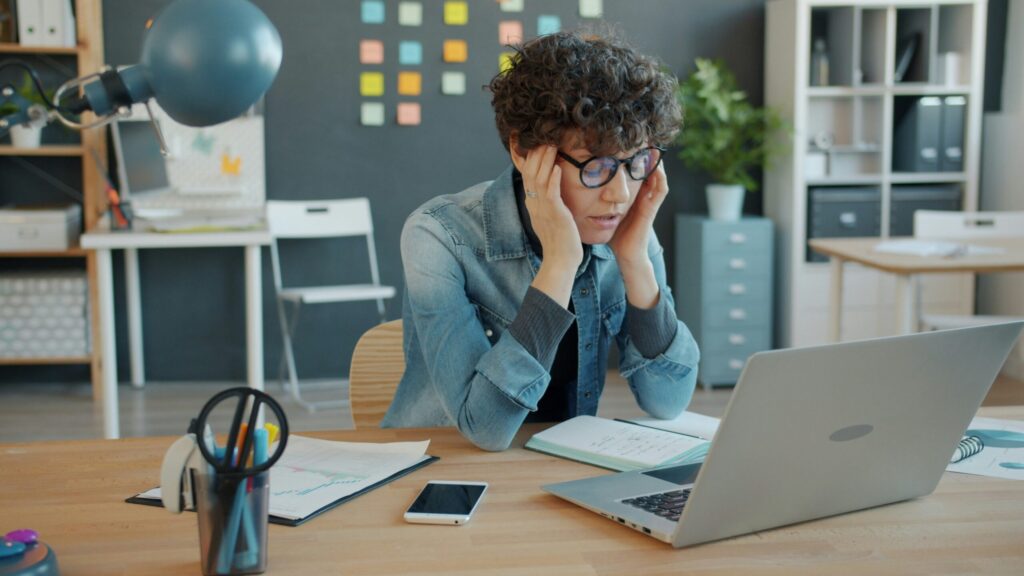
If your eyes feel dry, achy, or unfocused by the middle of the afternoon, you're probably dealing with digital eye strain — one of the most common complaints I hear in my exam chair these days. Between work screens, phones, and evening streaming, most of us look at a monitor for six, eight, sometimes ten hours a day, and our eyes were never built for that kind of sustained close-up focus.
What Causes Digital Eye Strain
Digital eye strain isn't caused by screens damaging your eyes directly — it's caused by how we use them. When you focus on a screen, your blink rate drops by more than half, which dries out the surface of the eye. Add in poor lighting, glare, small text, and a viewing distance that's too close, and your eye muscles end up working overtime just to keep things sharp. The result is the familiar cluster of symptoms: burning, blurred vision, headaches, and neck or shoulder tension from leaning toward the screen.
The 20-20-20 Rule, and Other Habits That Actually Help
The single most effective habit I recommend is the 20-20-20 rule: every 20 minutes, look at something 20 feet away for at least 20 seconds. It sounds almost too simple, but it gives your focusing muscles a real break and prompts a full blink, which resets moisture on the eye's surface. Beyond that, a few adjustments make a noticeable difference: position your screen about an arm's length away and slightly below eye level, increase text size rather than leaning in, and use artificial tears during long work stretches if your eyes tend to feel dry. Good room lighting matters too — a screen that's much brighter or dimmer than the room around it forces your eyes to constantly readjust.
When Digital Eye Strain Signals Something More
For most people, digital eye strain is uncomfortable but not dangerous, and it improves within days of adopting better screen habits. But if symptoms persist despite these changes, or if you're getting frequent headaches, double vision, or eye pain that doesn't ease up after time away from screens, it's worth having your eyes examined. Sometimes what looks like ordinary screen fatigue is actually an uncorrected refractive error or a binocular vision issue that needs proper correction, not just more breaks.
The good news is that digital eye strain responds well to small, consistent changes. You don't need to quit your job or throw out your phone — you just need your eyes to get the breaks they were designed for.