
Glaucoma awareness matters more than most people realize, because glaucoma rarely gives you any warning before it starts stealing your vision. It’s often called the “silent thief of sight” for exactly that reason — most people with early glaucoma have no pain, no blurriness, and no idea anything is wrong until a significant amount of peripheral vision is already gone. That’s the entire argument for regular screening rather than waiting for symptoms that may never come until it’s too late to fully protect what you have.
What Is Glaucoma and Why Awareness Matters
Glaucoma is a group of conditions that damage the optic nerve, usually (though not always) linked to elevated pressure inside the eye. That damage is permanent and, unlike a cataract, cannot be reversed with surgery — it can only be slowed or stopped. Raising glaucoma awareness is really about closing the gap between how common the disease is and how few people are actually screened for it. It’s one of the leading causes of irreversible blindness worldwide, and a large share of people living with it don’t yet know they have it.
Who’s at Higher Risk
Anyone can develop glaucoma, but risk climbs with age, especially after 40. Family history matters a lot — if a parent or sibling has glaucoma, your risk is several times higher. People of African, Hispanic, or Asian descent, along with those with diabetes, high myopia, or a history of eye injury, also carry higher risk and should be screened somewhat earlier and more frequently than the general population.
Why Regular Screening Beats Waiting for Symptoms
Because glaucoma typically starts in your peripheral vision, the brain quietly compensates and fills in the gaps long before you’d notice anything was missing. By the time central vision is affected, a substantial amount of optic nerve damage has usually already occurred. Regular dilated eye exams — the same ones I’d recommend for cataracts or macular degeneration — are what catch glaucoma while it’s still fully manageable, often with nothing more than daily eye drops.
What Glaucoma Screening Actually Involves
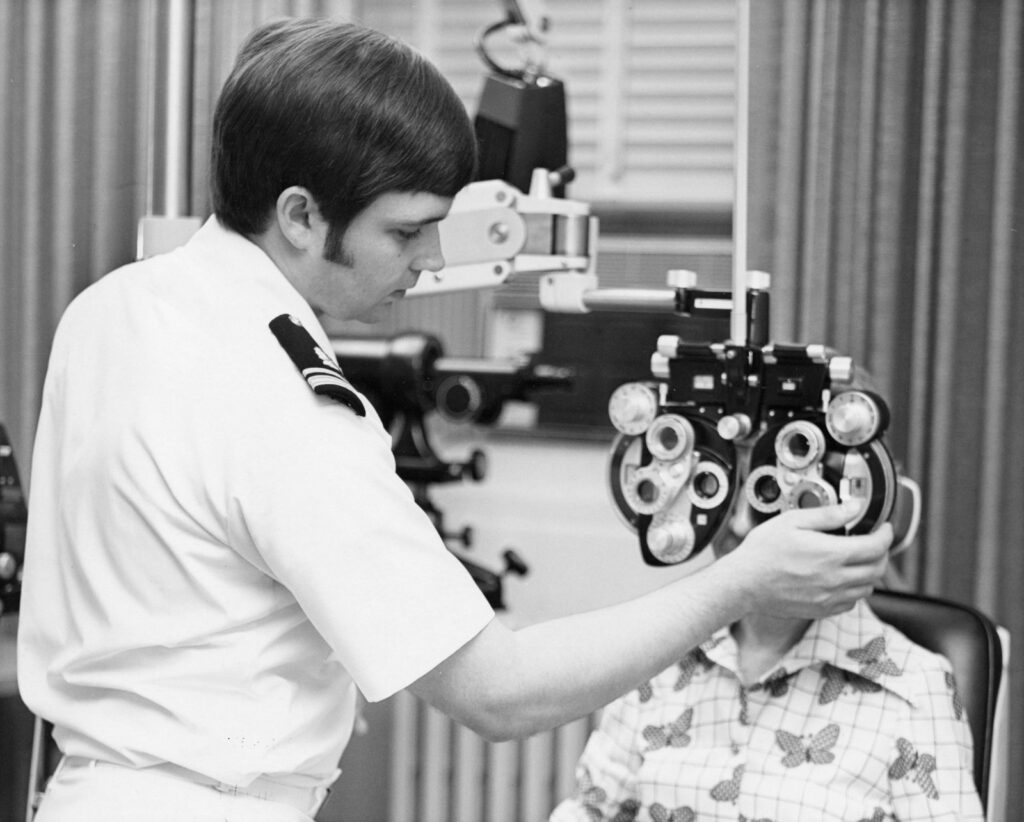
A proper glaucoma check is quick and painless: measuring eye pressure, examining the optic nerve directly, and often a visual field test that maps your peripheral vision for the subtle blind spots you can’t feel on your own. None of it requires special preparation, and for most adults it fits easily into a routine comprehensive eye exam every one to two years, or annually once risk factors are present.
None of this is meant to be alarming — it’s meant to be actionable. Glaucoma is highly manageable when it’s caught early, and the only real requirement is showing up for the exam before symptoms force the issue. If it’s been more than a year or two since your last comprehensive eye exam, that’s the simplest form of glaucoma awareness you can practice today.
For more on protecting your vision day to day, see our guide on everyday habits that protect your eyesight. For a deeper clinical overview, the American Academy of Ophthalmology’s guide to glaucoma is an excellent resource.