
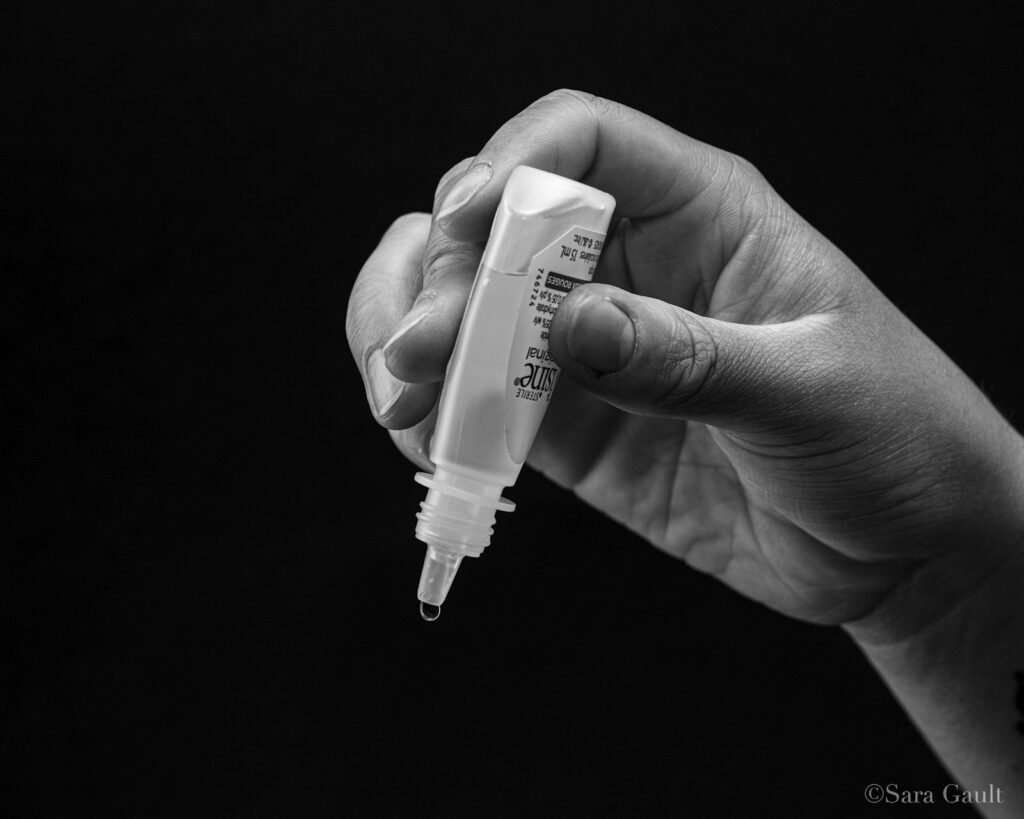
If your eyes feel scratchy, tired, or oddly watery by the end of the day, you’re not imagining it — dry eye relief is one of the most common things patients ask me about in clinic. Dry eye happens when your eyes don’t produce enough quality tears, or when your tears evaporate too quickly, leaving the surface of the eye without enough lubrication. It’s one of the most common complaints I see, and it tends to get worse in the second half of the day.

What Causes Dry, Uncomfortable Eyes?
Several everyday habits contribute to dry eyes. We blink less often when staring at a screen, which is one reason digital eye strain and dry eye so often show up together. Dry indoor air from heating or air conditioning, contact lens wear, certain medications (antihistamines and some blood pressure drugs among them), and simply getting older all reduce tear quality or quantity. Hormonal changes and some autoimmune conditions can play a role as well, which is why dry eye tends to become more noticeable with age, especially after menopause.
Everyday Dry Eye Relief That Actually Works
The good news is that dry eye relief usually starts with small, consistent habits rather than anything dramatic. Try the 20-20-20 rule: every 20 minutes, look at something 20 feet away for 20 seconds, which naturally resets your blink rate. Preservative-free artificial tears used two to four times a day can restore moisture without irritating the eye further. Running a humidifier in dry rooms, staying well hydrated, and angling air vents away from your face all help too. Warm compresses over closed eyelids for five minutes can loosen the oil glands along your lash line, which improves the quality of your own natural tears. Cutting back on contact lens wear time on especially dry or windy days makes a noticeable difference for many of my patients as well.
When Dry Eye Relief Needs a Doctor’s Help
If over-the-counter drops aren’t cutting it, or your eyes are persistently red, painful, or sensitive to light, it’s time to see an eye doctor rather than reaching for stronger drops on your own. We can check for underlying issues like blepharitis or meibomian gland dysfunction and offer treatments such as prescription anti-inflammatory drops, punctal plugs, or in-office procedures that address the root cause instead of just masking symptoms. According to the American Academy of Ophthalmology, dry eye is a chronic condition for many people, but it is very manageable with the right combination of treatments.
Dry eyes are common, but they’re not something you simply have to live with. A few consistent habits, paired with the right guidance when needed, can make a real difference in how your eyes feel every day.