
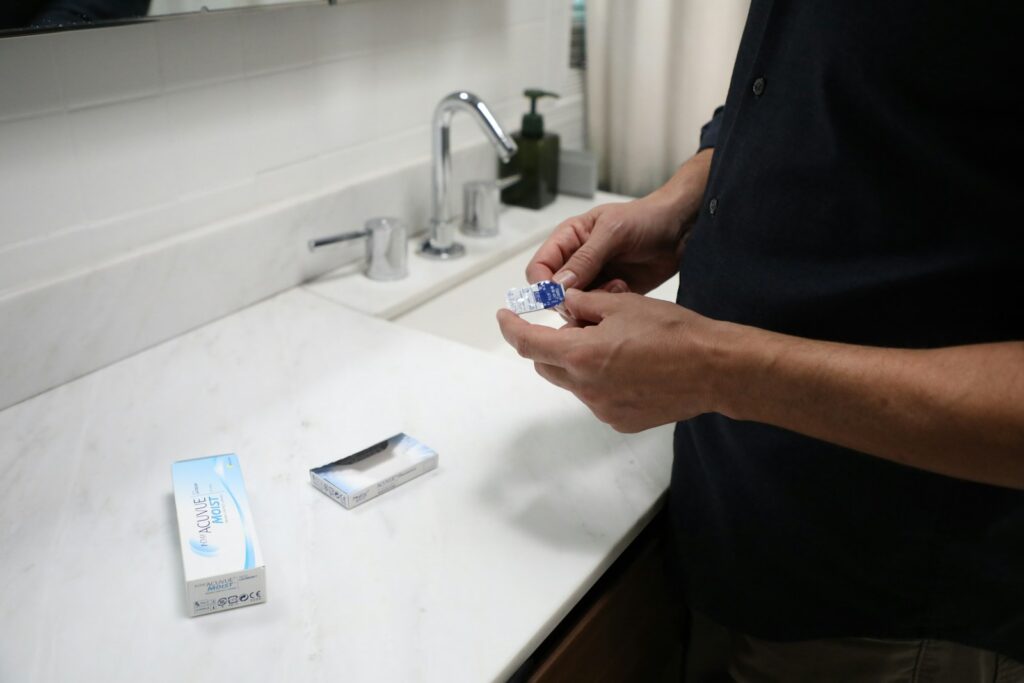
Good contact lens hygiene is one of the simplest ways to protect your eyes, yet it’s also one of the most overlooked parts of daily contact lens wear. As an ophthalmologist, I see it every week: patients who’ve worn lenses for years without ever updating their habits, then wonder why their eyes suddenly feel irritated or red. The good news is that most contact lens-related eye problems are preventable with a few consistent routines.
Why Contact Lens Hygiene Matters
Your cornea doesn’t have its own blood supply, so it relies on oxygen and nutrients from your tears and the air around it. A contact lens sits directly on this delicate surface for hours at a time, which means anything on the lens – bacteria, debris, even tap water – has direct access to your eye. Poor lens care is the single biggest risk factor for corneal infections, and some of these infections can threaten vision permanently if they aren’t caught early.
The Non-Negotiable Basics
Always wash and dry your hands before touching your lenses. Use only the multipurpose solution your eye doctor recommends – never water, saliva, or homemade rinses. Replace your lens case every one to three months, and empty it completely before adding fresh solution rather than “topping off” old solution. It also helps to put your lenses in before applying makeup and remove them before washing your face at night, so cosmetics and cleansers never come in contact with the lens surface. These small habits form the backbone of good contact lens hygiene, and skipping even one noticeably raises your risk of infection.
Common Mistakes I See in Practice
Sleeping in lenses that aren’t approved for overnight wear, swimming or showering with lenses in, and stretching a pair well past its replacement schedule are the three habits I address most often. Each one reduces the oxygen reaching your cornea and gives bacteria more time to multiply. Replacement schedules are built around what keeps your eyes healthy, not around stretching your budget.
When to Call Your Eye Doctor
Redness, pain, blurred vision, unusual discharge, or new light sensitivity after wearing contacts should never be waited out. Take the lenses out right away and call your eye doctor the same day. Most contact lens infections respond well to treatment when caught early, but delaying care – even by a day or two – can change the outcome significantly.
If you wear contacts, take a moment this week to review your own routine against the habits above. For more everyday prevention tips, see our post on 5 everyday habits that protect your eyesight. For more detailed guidance, the American Academy of Ophthalmology’s contact lens care guide is an excellent resource. Good contact lens hygiene isn’t complicated – it just has to be consistent.