
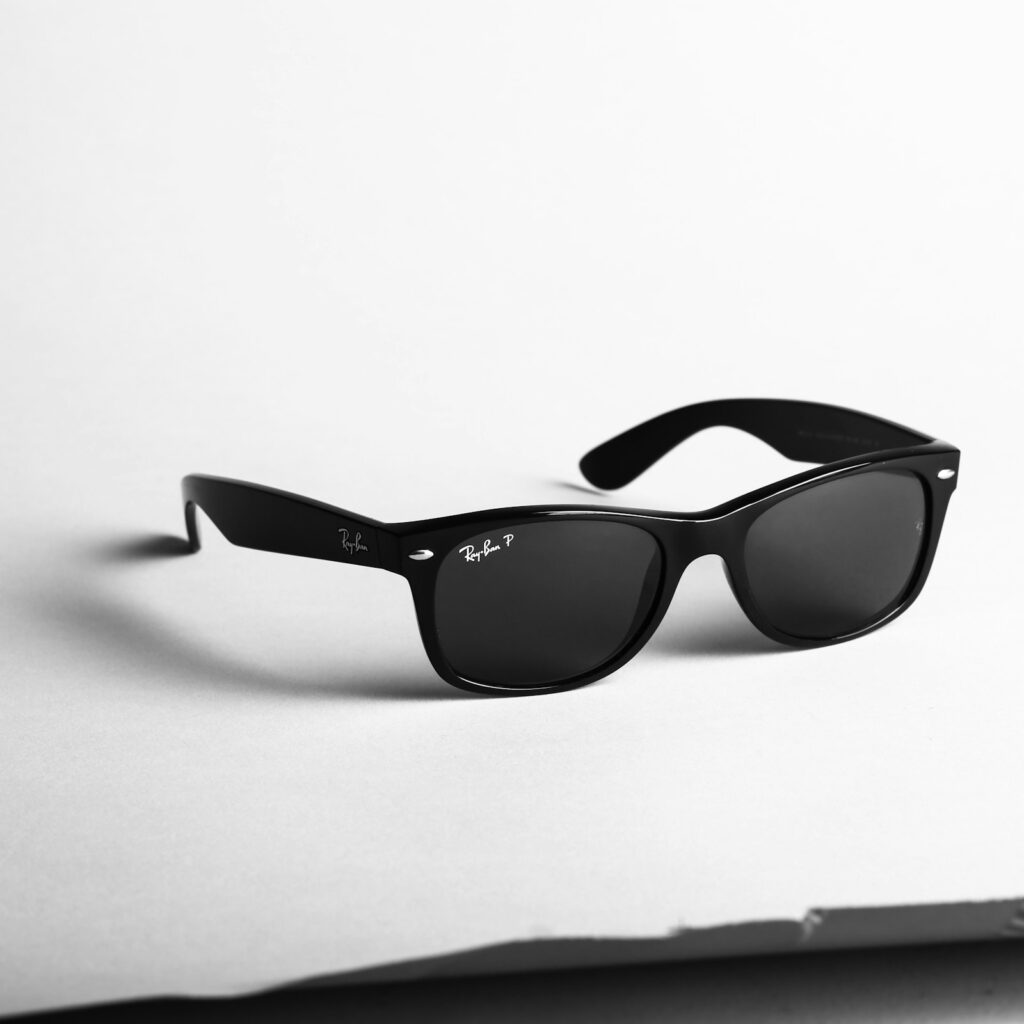
Sunglasses shopping season never really ends, and choosing sunglasses with real UV protection matters far more than most people realize. I still see the same mistake in clinic all year round: patients picking sunglasses based on how dark the lenses look, not what’s actually printed on the label. Dark lenses feel protective, but darkness and UV protection are two completely different things — and mixing them up can do more harm than wearing no sunglasses at all.
Why UV Protection Sunglasses Actually Matter
Ultraviolet light contributes to cataracts, macular degeneration, and growths on the eye’s surface called pterygia, along with sunburn of the cornea (yes, that’s a real thing — it’s called photokeratitis). This damage is cumulative. It builds up over decades of ordinary outdoor exposure, not just from obvious sun-worshipping. Cloudy days count too, since UV rays pass through cloud cover. Good UV protection sunglasses are one of the simplest, most effective habits for long-term eye health — right alongside the everyday habits that protect your eyesight.
Dark Lenses Can Actually Be Worse
Here’s the part that surprises most people: a dark lens with no UV coating is more dangerous than wearing nothing. Dark lenses trick your pupil into dilating, since less visible light is getting in. A wider pupil lets in more UV rays, not fewer, if that lens isn’t actually blocking them. You end up funneling more UV straight to your retina and lens than if you’d squinted in the sun bare-eyed.
What to Look For in UV Protection Sunglasses
Skip the guesswork and look for a label that says “100% UV protection” or “UV400.” Either one means the lens blocks essentially all UVA and UVB rays. Polarization is a separate feature — it cuts glare off water, snow, and pavement, which is genuinely nice for comfort, but it says nothing about UV protection on its own. Price is a poor stand-in for either: plenty of inexpensive sunglasses meet UV400, and plenty of expensive designer pairs, surprisingly, don’t. The American Academy of Ophthalmology’s sunglasses guide is a great reference if you want more detail on lens ratings.
A Few Practical Habits
Choose a wraparound or larger frame that blocks light sneaking in from the sides. Keep a pair of UV protection sunglasses in the car and by the door so you’re not tempted to skip them on quick errands. And if you spend a lot of time outdoors — driving, gardening, at the beach — a wide-brimmed hat adds meaningful extra protection on top of good sunglasses, especially for the delicate skin around your eyes.
None of this needs to be complicated. Check the label, not the tint, and your eyes will thank you decades from now.