
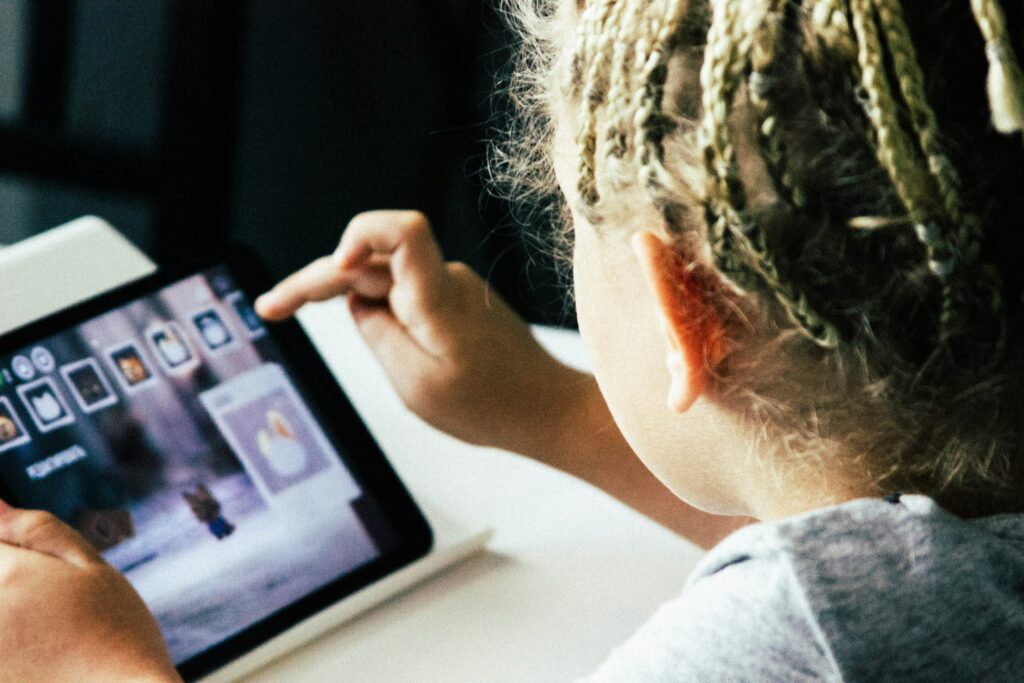
Screen time for kids has become almost impossible to avoid, between remote classwork, video calls with grandparents, and after-school shows. As an ophthalmologist, I see more children than ever coming in with tired, red, or strained eyes after long stretches in front of a tablet or laptop. The good news is that with a few simple habits, your child can enjoy their screens without putting their long-term vision at risk.
How Screen Time for Kids Affects Growing Eyes
A child’s eyes are still developing, and research has linked extended near-focus work, like staring at a screen a few inches from the face, to faster progression of nearsightedness (myopia). On top of that, kids blink far less often while absorbed in a show or game, which dries out the surface of the eye and leaves it feeling scratchy or tired by the end of the day. Because children also tend to hold devices closer than adults do, the strain on their focusing muscles is often greater than we realize.
Signs Your Child Is Overdoing It
Watch for eye rubbing, frequent blinking, squinting, or complaints of headaches after homework on a laptop. Some kids sit unusually close to the TV or hold a tablet right up to their nose, both signs that their eyes are working harder than they should. If your child mentions blurry vision, especially when looking up from a screen to something across the room, it is worth paying attention rather than brushing it off as tiredness.
Making Screen Time for Kids Safer on Their Eyes
A few small changes go a long way. Try the 20-20-20 rule: every 20 minutes, look at something 20 feet away for 20 seconds. Keep devices at arm’s length rather than close to the face, brighten the room so the screen isn’t the only light source, and build in a screen-free wind-down before bed. Outdoor playtime matters too; studies consistently show that children who spend more time outside have a lower risk of developing myopia, so a bit of daily sunshine is genuinely protective for their eyes.
When to See an Eye Doctor
If your child’s eye strain, squinting, or headaches continue despite these adjustments, it is time to schedule a comprehensive eye exam, since uncorrected vision problems can masquerade as “too much screen time.” Routine checkups are especially important once school starts, when daily reading and screen demands increase. Managing screen time for kids isn’t about banning devices; it’s about building habits that protect their eyes while they grow. For more guidance on helping children use screens safely, the American Academy of Ophthalmology has published helpful recommendations at aao.org.